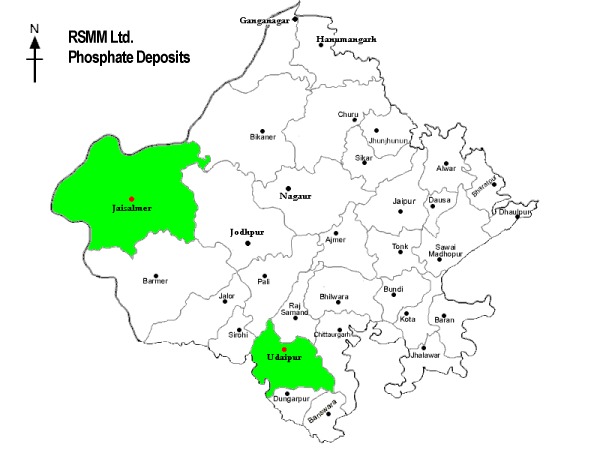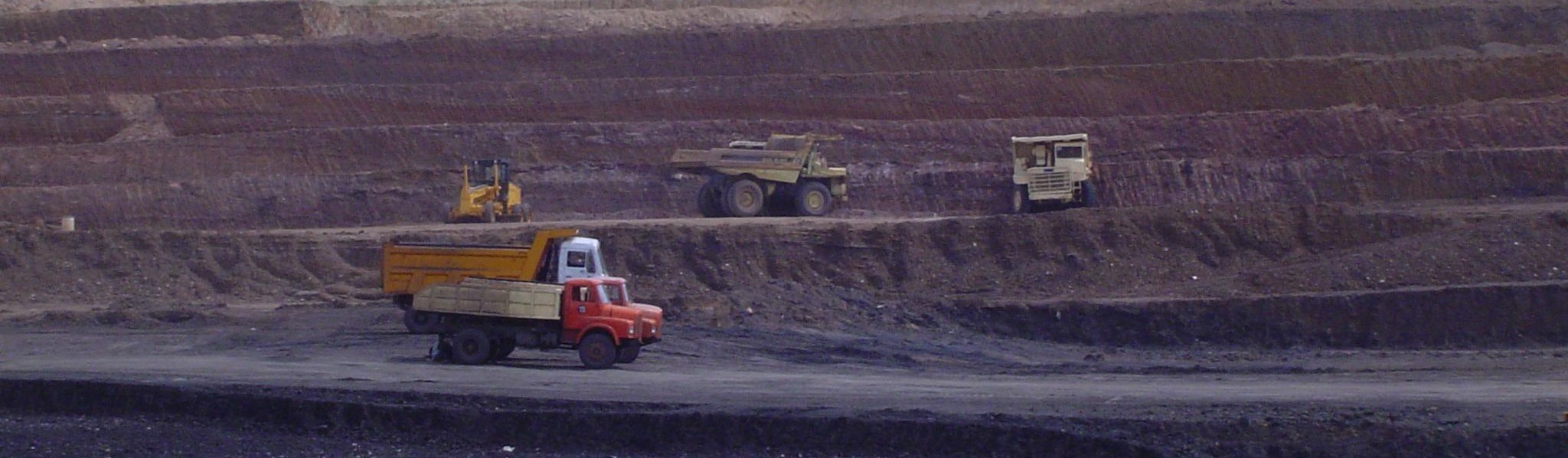
Rock Phosphate mining at Jhamarkotra near Udaipur is one of the core activity of RSMML. Jhamarkotra Rock Phosphate mine is one of the largest mechanised opencast mines of country. In agriculture based economy like India, the fertilizer production plays a pivotal role. Only 10% of the requirement of raw material for phosphatic fertilizer production is being met through indigenous sources and the rest is met through imports. Thus Jhamarkotra plays an important role by contributing 90% of rock phosphate production of India.
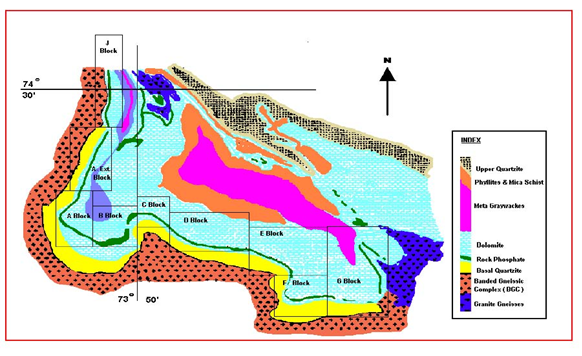
Jhamarkotra Rock Phosphate deposit is situated 26 km southeast of Udaipur, Rajasthan. The Jhamarkotra Rock Phosphate deposit extends over a length of about 16 km with average width of phosphate bed of varies from 5 to15 meters. The phosphate bed shows thickening and thinning throughout the stretch. The phosphate bed is dipping at angle of 55o on an average but at some places it is sub-vertical and even overturned. Mining at Jhamarakotra Rock Phosphate Mines extend up to 200m depth from surface.
Rock-type around Jhamarkotra represent a succession of shallow water geocynclinal marine sediments deposit during Precambrian period on the basement of banded gneissic complex. The sediments show low grade regional metamorphism. The rock phosphate occurs in the form of conspicuous grey irregularly shaped bodies showing concentric algal structure called stromatolite. These are cylindrical bodies growing perpendicular to bedding plane. The phosphorite bed forms an excellent marker bed both for structural and stratigraphic reconstruction.